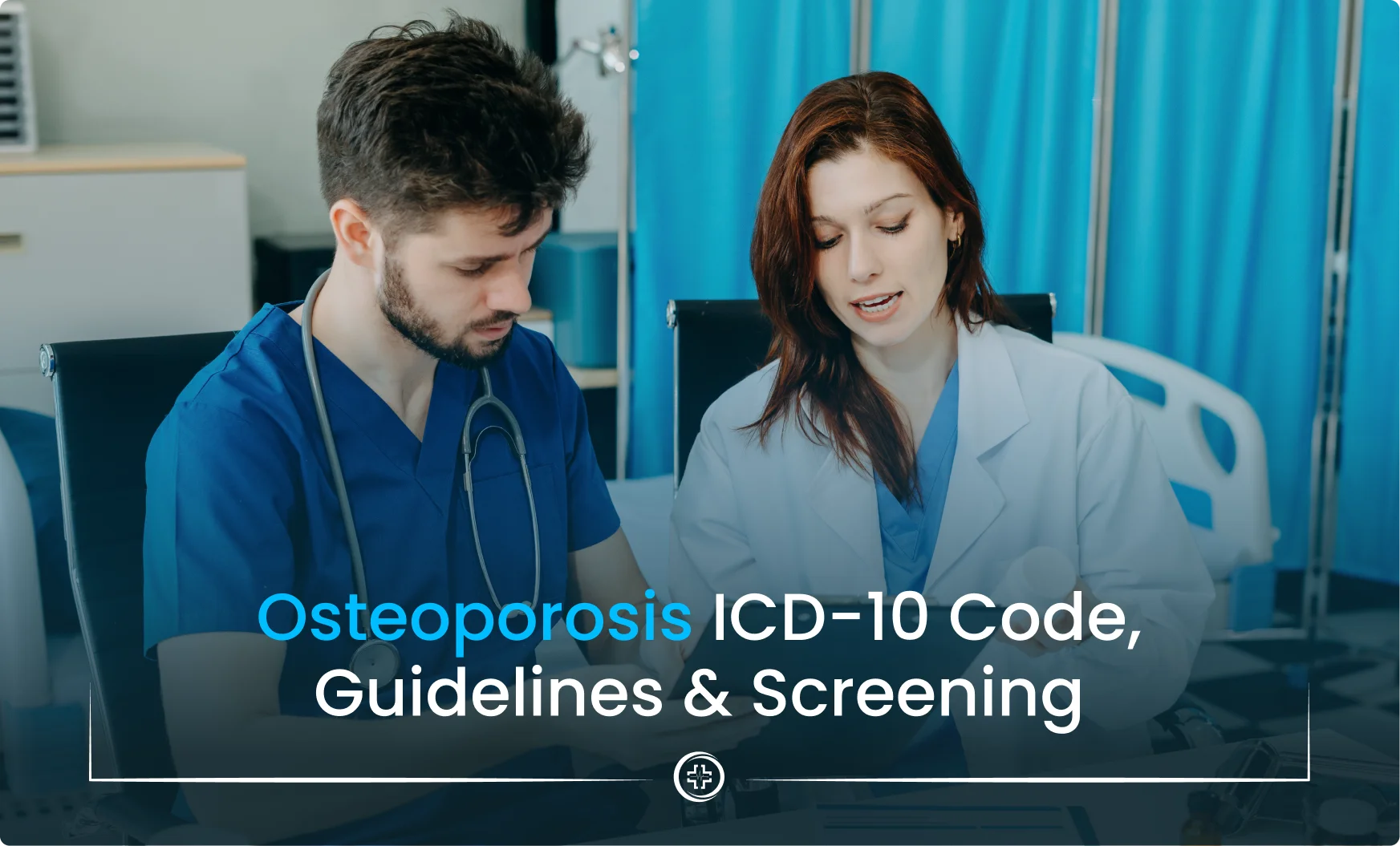
About 1 in 5 women and 1 in 20 men age 50 or older have osteoporosis. It reduces your bones strength, making them vulnerable to fracture. Experts who treat this condition are known as endocrinologists, orthopedists.
Knowing the right reason behind osteoporosis is crucial to assign the right Osteoporosis ICD-10 Code. This comprehensive blog will explore all you need to know about the ICD-10 code for osteoporosis, screening and guideline.
Understanding Osteoporosis ICD-10 Code
Usually, M.80 series of codes reflect age related osteoporosis or other osteoporosis with current pathological fracture. However, for the unspecified fracture code M80.0 is used. These codes are selected on the basis of anatomical site of fracture.
A little mistake in the code assignment leads to claim denials and delayed reimbursement. Therefore, healthcare providers must know the accurate code of each condition to get timely payments.
What Is ICD-10 Osteoporosis Unspecified?
ICD-10 Osteoporosis Unspecified is a diagnosis code for bone loss. It applies when the provider confirms osteoporosis. Still, the record gives no specific type. Coders should never guess missing details. They should only code what the chart states. If later notes add more facts, use the more specific code.
Many providers first record the main diagnosis. They may identify the exact type later. In those cases, this code helps report the condition until more details appear.
ICD-10 Osteoporosis Unspecified Code
The table below explains the main coding details.
| Item | Details |
| ICD-10-CM Code | M81.80 |
| Code Name | Other osteoporosis without current pathological fracture, unspecified site |
| Billable | Yes |
| Chapter | Diseases of the musculoskeletal system |
This code is billable. It supports claim submission when documentation matches the diagnosis. The medical record should always support the selected code.
Is This Code Billable?
Yes. ICD-10 Osteoporosis Unspecified is a billable ICD-10-CM code. Providers may report it for reimbursement when documentation meets payer rules. Good records remain very important. Missing details may delay claim review. They may also lead to denials.
Coders should confirm every chart before assigning this code. They should check provider notes, test results, and the final diagnosis. Clear documentation reduces coding errors.
When Should You Use This Code?
Use ICD-10 Osteoporosis Unspecified when osteoporosis is confirmed. The provider must not identify the exact type. The code also fits when no current pathological fracture exists.
Do not use this code if the record clearly names another form. Always choose the most specific ICD-10 code available. Better detail improves coding accuracy and claim quality.
What Is Osteoporosis?
Osteoporosis is a disease that weakens bones. Weak bones break more easily. Many people have no early signs. Some learn about the disease after a fracture.
Bone loss often develops slowly. Most people notice nothing at first. That makes early testing very important. Quick diagnosis helps reduce future fractures.
Common Causes
Many factors increase bone loss. Age remains the biggest risk. Women after menopause face higher risk. Low calcium intake also affects bone strength. Low vitamin D causes weak bones too. Long steroid use increases risk. Family history may also play a role. Smoking and heavy alcohol use can worsen bone health.
Some causes cannot change. Others improve through healthy habits. Early care helps protect bone strength.
Signs and Symptoms
Most people feel normal during early disease. Symptoms often appear after bone weakness grows. Back pain may develop. Height may slowly decrease. Some people develop a curved back. Others suffer fractures after minor falls.
Doctors should not rely only on symptoms. Imaging tests help confirm the diagnosis. Clinical findings also support accurate coding.
How Doctors Diagnose Osteoporosis
Doctors begin with a full medical history. They ask about past fractures. They also review family history and current medicines. A physical exam may follow.
A DEXA scan measures bone density. This remains the standard test. Blood tests may rule out other diseases. Test results help support the final diagnosis.
Clear documentation helps coders select the right ICD-10 code. Good records also improve claim accuracy.
Documentation Requirements
Strong documentation supports correct coding. The provider should clearly state the diagnosis. The record should also include test findings. It should mention fracture status. The affected site should appear when known. The treatment plan should also remain clear.
Incomplete records create coding problems. Missing details often slow reimbursement. Clear notes improve coding quality and reduce claim issues.
Common Coding Mistakes
Many coding errors happen because records lack detail. Some coders assign unspecified codes too soon. Others ignore provider updates. Both mistakes create claim problems.
Always review the final note before coding. Never assume facts that the provider did not document. Avoid coding osteoporosis with fractures unless the record confirms them.
Related ICD-10 Codes
Choosing the right code matters for every claim. Similar codes may describe different conditions. Always compare the provider’s notes before coding. The most specific code should always come first.
| ICD-10 Code | Description |
| M81.0 | Age-related osteoporosis without current pathological fracture |
| M81.8 | Other osteoporosis without current pathological fracture |
| M80.- | Osteoporosis with current pathological fracture |
| Z13.820 | Encounter for screening for osteoporosis |
These codes may look alike. Still, each code serves a different purpose. Review the chart before making your choice.
Screening for Osteoporosis ICD-10
Many people ask about screening for osteoporosis icd 10. The correct screening code is Z13.820. This code applies when a patient has no diagnosis. The visit focuses on screening only.
Screening differs from diagnosis. A screening checks for possible disease. A diagnosis confirms the disease already exists. Do not report a diagnosis code for a routine screening visit. If testing confirms osteoporosis later, report the diagnosis code for that visit.
Providers often screen older adults. Postmenopausal women also receive routine screening. Patients with high risk factors may need early testing. Good documentation should explain why the screening occurred.
Osteoporosis vs. Osteopenia
Many people confuse these conditions. They are not the same disease. Osteopenia means bone loss is mild. Osteoporosis means bone loss is much worse.
Doctors usually confirm both conditions with a DEXA scan. The scan measures bone density. Lower scores suggest greater bone loss. Coders should never treat both conditions as equal. The provider’s final diagnosis always guides code selection.
Coding Tips
Read the entire medical record first. Check every provider note carefully. Confirm whether a fracture exists. Review imaging results when available. Select the most specific ICD-10 code possible. Never guess missing information.
Update the code if new details appear. Better documentation supports better coding. Accurate coding also improves claim quality.
Reimbursement Tips
Correct coding supports smooth reimbursement. Documentation remains the strongest support for every claim. Payers expect complete medical records. Missing details may trigger claim reviews.
Providers should document the diagnosis clearly. Test results should support the condition. Treatment plans should match the reported diagnosis. Strong records reduce billing delays.
Best Documentation Practices
Good documentation helps both coders and payers. Every chart should explain the patient’s condition. Test findings should remain easy to review. The provider should record fracture status clearly. Treatment plans should match the diagnosis.
Clear documentation reduces coding questions. It also improves reimbursement success. Small details often make a big difference.
Conclusion
Clear notes help good coding. ICD-10 Osteoporosis Unspecified should be used only when the chart shows bone loss but not its kind. Coders should read the full chart first.
They should pick the best code each time. Good notes, right codes, and clean claims help cut claim denials. At Paymedics, we help care teams code right, send clean claims, and get fast reimbursement.
Frequently Asked Questions
What is the ICD-10 code for unspecified osteoporosis?
ICD-10 Osteoporosis Unspecified uses M81.80. Use this code when the chart shows bone loss. The chart must not name the kind. The chart must also show no new bone break. The code must match the care note.
Is M81.80 a billable ICD-10 code?
Yes. M81.80 is a billable ICD-10-CM code. You may use it for a claim when the care note backs the code. The chart must show the right facts. Good notes help cut claim hold and claim loss.
What is the ICD-10 code for screening for osteoporosis?
The code for screening for osteoporosis icd 10 is Z13.820. Use this code when the visit is for a bone check. The chart must not show bone loss yet. If tests find the disease, use the right diagnosis code next.
What is the gap between osteoporosis and osteopenia?
Both mean bone loss. The gap is the size of the loss. Osteopenia means less bone loss. Osteoporosis means more bone loss. A scan helps tell them apart. The care note should name the right one.
Can this code be used with a bone break?
No. Do not use this code if the chart shows a new bone break. Use the code made for bone loss with a break. Read the full chart first. Make sure the code fits the care note.
How can care teams help good coding?
Care teams should write full and clear notes. The chart should show test facts and all key signs. It should list the care plan as well. Good notes help coders pick the best code. They also help speed claim review and reimbursement.