Hyperlipidemia ICD 10 coding is key for clean billing and fast pay in US health care. Many claims fail due to small code errors, missing notes, or wrong use of rules. This guide shares 5 best ways to improve coding work simply.
You will learn how to pick the right code, check records, avoid common mistakes, and keep data clean. These steps help coders, doctors, and billing teams reduce rework and claim loss. If you follow these tips, your coding will be more correct, faster, and easier to manage in daily work.
What is Hyperlipidemia ICD 10 coding?
Hyperlipidemia ICD 10 coding has a direct role in claim approval. Around 42% of all claim denials are linked to coding issues. When the code is right, claims move quickly. It also helps keep billing clean, as each case is shown in a standard form. This makes it easy for payers to read, check, and release the reimbursement without delay. Wrong or unclear coding can slow down payment or cause claim loss.
Impact on approval
Hyperlipidemia ICD 10 coding has a direct effect on claim approval. When the code is right and matches the patient record, claims move very quickly. Accurate coding helps payers trust the claim and reduces the chance of rejection or delay.
Link with clean billing
This code also keeps billing clean and clear. Each case is shown in a standard form, so it is easy for insurance teams to read and process. Clean coding reduces confusion, lowers errors, and helps payments come in a smooth and steady way.
Common mistakes in Hyperlipidemia ICD 10 coding
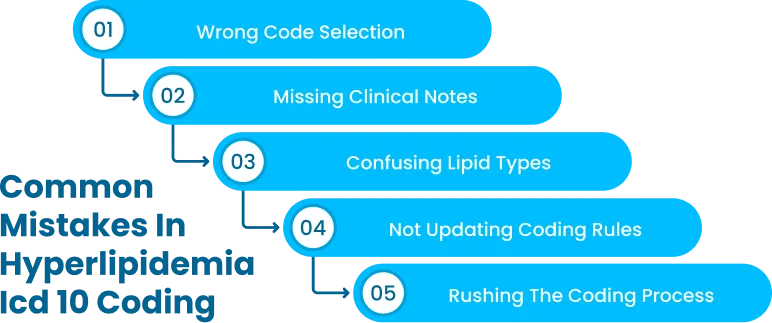
Hyperlipidemia ICD 10 coding often has small errors that can lead to claim issues. These mistakes happen when coders rush, miss details, or fail to read full patient notes.
Even small gaps can cause claim delay, rejection, or wrong billing output. Careful review of records reduces these problems and keeps coding accurate for better approval results.
1. Wrong code selection
Using the wrong code is a common issue. It happens when coders guess instead of checking the patient’s condition, leading to claim rejection or mismatch in billing records and payer confusion.
2. Missing clinical notes
Sometimes important doctor notes are not checked. Missing details from records can lead to wrong coding, which affects claim accuracy and may slow down payment or cause claim denial.
3. Confusing lipid types
Hyperlipidemia has different types, but coders may mix them. Wrong type selection causes errors in records and leads to billing issues, making claims less clear for insurance review.
4. Not updating coding rules
ICD 10 rules can change over time. If coders use old guidelines, it may result in outdated coding, leading to errors in claims and reduced approval chances.
5. Rushing the coding process
When coding is done in a hurry, small details are missed. This can lead to wrong entry, missing data, and poor claim quality, which increases rejection risk from payers.
1: Understand patient records first
You must read doctor notes and lab reports with full focus. This helps you see the real health issue before picking a code. If notes are not clear, coding can go wrong and affect claims.
A slow and careful review saves time later by reducing errors. It also helps in correct data entry for billing teams. Good reading habits build strong coding work. This step is basic but very important for clean and safe claim flow in US health care systems.
2: Choose the exact hyperlipidemia icd 10 code
Each patient case can be different, so the code must match the real condition. Never guess the code, as it can lead to claim rejection or delay.
Always check the details in the report before the final choice. Using the right code helps payers trust the claim and process it fast. It also keeps records clean and easy to audit.
3: Keep coding notes simple and clear
Coding becomes better when notes are short and clear. Simple words help all team members understand the case fast. Long or complex notes can cause confusion and errors in billing. Clean notes also make audits easier and faster.
When data is easy to read, payers can process claims without delay. This also reduces back-and-forth between teams. Clear notes support smooth workflow in daily coding tasks.4: Double-check hyperlipidemia ICD-10 before claim
A second review helps catch small errors that may be missed the first time. These small errors can lead to claim loss or delay. Checking work again builds trust in data and improves accuracy.
It also reduces rework and saves time for billing teams. A simple review step can prevent big problems in the payment flow.
5: Stay updated with ICD 10 changes
Hyperlipidemia ICD-10 rules can change over time, so updates are very important. Coding teams must stay aware of new changes in US health rules. If old codes are used, claims can fail or get delayed. Regular learning helps staff stay correct and confident in their work. Simple training or updates can improve daily coding quality.
Role of coders in hyperlipidemia icd 10 accuracy
Coding accuracy depends a lot on coders’ daily work. Coders read records, pick codes, and prepare claims for billing teams. Their role is key because small mistakes can affect full claim flow. They must stay alert, be careful, and follow rules in each case.
Teamwork also matters as coders share info with doctors and billing staff. Good coding helps reduce errors and improve payment speed. Coders are a core part of the system that keeps health billing clean, smooth, and correct in daily operations.
How hyperlipidemia icd 10 affects claim approval
When coding is right, claims pass checks fast and get paid without delay. Wrong coding can cause a hold, rejection, or slow review. Clear codes help payers understand the case in simple form.
This builds trust and reduces confusion in billing systems. It also improves cash flow for clinics and care groups. Good coding leads to a smooth approval process and fewer issues. That is why the correct use of code is very important in US health billing.
Clean data and hyperlipidemia icd 10 link
When coding is clear, all records stay neat and easy to read. Clean data helps in fast audits and simple claim checks. It also reduces mistakes in billing and payment systems.
If data is messy, it can cause delays and confusion in claims. Good coding supports strong record-keeping in daily work. It also helps teams work faster and with less stress. Clean data is a key part of a safe and correct billing flow.
Tools used in hyperlipidemia icd 10 coding
These tools help reduce errors, speed up work, and keep patient records clear and organized for better billing and claim tracking.
| Tool | Simple Use | Benefit |
| EHR Systems | Store patient records in one place | Easy access to full patient history |
| Coding Software | Suggest correct ICD-10 codes | Reduces wrong code selection |
| Claim Systems | Submit insurance claims | Faster claim processing and approval |
| Audit Tools | Check coding accuracy | Finds and fixes errors early |
| Billing Platforms | Manage payment data | Keeps billing smooth and organized |
Audit tips for hyperlipidemia icd 10 coding
Internal checks help find errors before claims go out. Teams should review records step by step to catch small issues. Fixing errors early helps avoid claim loss or delay.
Good audit habits improve trust in billing data. It also keeps work clean and ready for review. Regular checks make coding stronger and more stable. This step is very important for smooth billing and helps reduce risks in health claim systems.
Final thoughts
Hyperlipidemia ICD-10 accuracy is very important for smooth billing and care work. When coding is correct, claims move fast, and systems stay clean. Small habits like checking notes and using the right codes make a big difference.
Teams must stay careful and follow simple steps every day. Good coding reduces errors and improves payment flow. Paymedics offers professional coding and billing services to help organizations avoid the administrative burden, achieve accuracy, and maximize profits.
Frequently Asked Questions
1. What is hyperlipidemia icd 10 used for?
Hyperlipidemia icd 10 is used to show high blood fat in a coded form for US health records, billing, and insurance claim processing in a simple, standard way.
2. Why is hyperlipidemia icd 10 coding important?
It helps make claims clear, fast, and correct. Proper use of this code reduces errors, improves approval speed, and supports clean medical billing systems overall
3. What are common mistakes in hyperlipidemia icd 10 coding?
Common issues include wrong code choice, missing notes, and rushed work.
4. How does hyperlipidemia icd 10 affect claim approval?
Correct hyperlipidemia icd 10 coding improves claim approval speed. It helps payers understand cases clearly, reduces confusion, and lowers the chances of rejection or delay in payment.
5. What tools help in hyperlipidemia icd 10 coding?
EHR systems, coding software, and billing tools support the coding work. They help reduce errors, improve speed, and keep records and claims well organized.