
In hospitals and clinics across the US, every patient case must be written in a clear and exact way. Even a small mistake in medical records can slow down insurance payment or create claim problems. This is where cholecystectomy icd 10 code become very important.
If you are new to medical coding, these codes may look hard at first, but they are actually simple when explained in easy steps. In this guide, you will learn how gallbladder surgery cases are coded in real life.
What is cholecystectomy icd 10 Coding?
Cholecystectomy coding is a way to write a gallbladder case in a short form. When a doc takes out the gallbladder or treats a gallbladder prob, we use small codes in place of long notes. These codes help the host team, doc, and ins firm know what care was done in a fast and clear way.
ICD-10 Codes for Cholecystectomy are used in this work to keep all case info clean and set in one system. Proper ICD-10 coding can help reduce claim errors by up to 30–40% in billing systems Learn more about ICD-10 Codes
Why cholecystectomy icd 10 codes Are Important
Using ICD-10 Codes for Cholecystectomy is not just study work. It is used in real billing every day.
Main reasons:
- Helps get money from insurance
- Stops claim rejection
- Shows a clear patient record
- Helps the doctor and hospital work smoothly
Therefore, accurate coding documentation is crucial for timely reimbursements and higher practice revenue.
Common Gallbladder Problems Before Surgery
Before implementing cholecystectomy icd 10 code, you must know what happens to patients.
Most common issues:
- Gallstones blocking flow
- Pain in the right upper belly
- Swelling in the gallbladder
- Infection in the gallbladder
- Bile duct blockage
Full List of 10 Essential cholecystectomy icd 10 code in 2026
These are the most used cholecystectomy icd 10 codes in US hospitals.
- K80.20 – Gallstones without infection
- K80.21 – Gallstones with blockage
- K80.10 – Stones with swelling
- K81.0 – Sudden infection
- K81.1 – Long-term infection
- K82.9 – Unknown gallbladder issue
- K83.0 – Bile duct infection
- K80.50 – Bile duct stone
- Z90.49 – Gallbladder removed status
- Z98.890 – After surgery follow-up
These 10 Essential ICD-10 Codes for Cholecystectomy in 2026 cover most real hospital cases.
Detailed Explanation of Each Code
In gallbladder care and cut op cases, each cholecystectomy icd 10 code shows a diff state of the pat. Docs and coders use these codes to mark what kind of prob the pat has, how bad it is, and if sure it was done. This helps hos keep rec clear and helps ins teams give pay with no delay or mix up.
- K80.20 – Used when gallstones are in the body.. The pat may feel pain in the top right gut area, but there is no heat, no fever, and no swelling. It is a mild form of stone case and often found in test scans.
- K80.21 – Used when a stone blocks the flow path. Pain can be sharp and strong. The pat may need fast care or even sure if flow stays blocked for a long time.
- K80.10 – Shows stone with swell in the gallblad. The area is sore, and the cat may feel pain after meals or at night.
- K81.0 – This is a fast start in case. The pat may have fever, sick feelings, pain, and no wish to eat.
- K81.1 – Long term in case. Pain keeps coming back again and again over time.
- K82.9 – Used when doc is not yet sure what exact prob is there. It is a start level note code.
- K83.0 – Shows inf has moved into bile path. This is a more hard and risky state.
- K80.50 – Used when stone is in a bile duct. Flow of bile is blocked full or part.
- Z90.49 – Shows gallblad is now removed after sur. It is used in post op rec.
- Z98.890 – Used in post sur care and follow up visits to track heal stage and check ups.
Hospital Workflow
Let’s see how cholecystectomy icd 10 codes are used step by step:
Step 1: Doctor writes report
- Symptoms and test results
Step 2: Coder reads notes
- Finds main issue
Step 3: Code selection
- Picks correct ICD-10 code
Step 4: Billing sent
- Insurance gets claim
Step 5: Payment or review
- Approved or corrected
| Code | Meaning | Case Type |
| K80.20 | Gallstones no infection | Simple case |
| K80.21 | Blocked stone | Pain case |
| K81.0 | Acute infection | Emergency |
| K81.1 | Long infection | Repeat pain |
| K83.0 | Bile duct infection | Serious |
| K80.50 | Duct stone | Complex |
| Z90.49 | Gallbladder removed | After surgery |
| Z98.890 | Post surgery care | Follow-up |
| K80.10 | Stone + swelling | Inflamed case |
| K82.9 | Unknown issue | Early check |
Common Mistakes Beginners Make
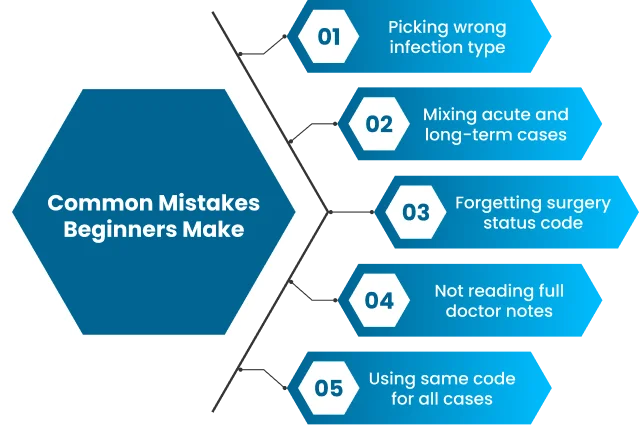
Mistakes can lead to claim delay, wrong billing, or rejected reports in hospital systems. Careful readingMany new coders make errors while using cholecystectomy icd 10 code. These small and correct code choices are very important to avoid issues and keep records clean and accurate.
- Picking wrong infection type
Beginners often choose the wrong infection code which does not match patient notes, leading to wrong billing and claim rejection issues.
- Mixing acute and long-term cases
Some coders confuse sudden infection with long-term disease, which changes the code type and creates errors in medical records.
- Forgetting surgery status code
Many skip post-surgery codes like removal status, which is important to show that gallbladder has already been taken out.
- Not reading full doctor notes
Skipping full notes leads to missed details, which can result in wrong code selection and inaccurate patient record documentation.
- Using same code for all cases
New coders sometimes use one code for every patient, which is incorrect because each case has different conditions and needs specific coding.
Why Insurance Companies Check These Codes
Insurance companies use cholecystectomy icd 10 code to decide payment.
They check:
- Is diagnosis real?
- Is surgery needed?
- Is the code correct?
Conclusion
10 Essential cholecystectomy icd 10 code play a key role in medical billing and coding work, especially in US healthcare systems. When you learn these codes step by step and practice with real patient notes, your speed and accuracy improve with time. At first it may feel hard, but daily practice makes it simple and natural.
For better results, always read doctor notes carefully and match the correct code with the patient’s condition. Avoid rushing, and focus on small details.
At Paymedics, we believe strong coding skills build strong careers. Keep learning, keep practicing, and grow your confidence in medical billing step by step.
Frequently Asked Questions
1. What is cholecystectomy icd 10 code used for?
It is used to show gallbladder removal or related disease in hospital records so insurance can process payment correctly.
2. Why is holecystectomy icd 10 code important in billing?
They help hospitals get payment from insurance by clearly showing patient condition and treatment details without confusion or delay.
3. What is the main gallstone code?
K80.20 is commonly used when gallstones exist without infection, making it one of the most used beginner-level codes.
4. Can coding affect payment speed?
Yes, correct coding makes claims fast. Wrong or missing codes can delay payment or cause insurance rejection in hospitals.
5. What does Z90.49 show?
It shows that the gallbladder has already been removed after surgery and patient is in post-surgery recovery stage.
6. How can beginners learn ICD-10 coding easily?
By reading daily case notes, practicing common codes, and slowly learning patterns from real hospital reports step by step.