
Revenue Code 0112 is one of those billing details that has a big impact on how hospitals and providers get paid. It is used every day in inpatient billing, and even one mistake with this code can lead to underpayment, claim delays, or payer questions.
This guide explains Revenue Code 0112 in very simple English so your team can understand it clearly and use it correctly.
What Revenue Code 0112 Means?
Revenue Code 0112 is used to show that a patient stayed in a semiprivate two-bed room during an inpatient admission. This means the room has two beds, and the patient receives normal, routine care from nursing staff.
The code does not include special procedures, therapies, or private room services. It simply tells the payer what kind of room the patient used each day.
Think of it like a hotel. If you book a double-share room, the hotel charges for that exact room type. Similarly, hospitals use Revenue Code 0112 to show the correct room and board type for an inpatient stay.
Why This Code Matters for Reimbursement
Room and board charges form a large part of the total inpatient bill. Because they are significant, payers review them very closely. When Revenue Code 0112 is used correctly, it helps payers understand the level of care, the type of room, and the standard daily services provided to the patient.
Accurate use of this code protects hospital revenue in several ways:

Even a small error in room coding can slow down the entire claim process.
When Providers Should Use Revenue Code 0112
Use Revenue Code 0112 when the patient meets all three conditions:
- The patient is officially admitted as inpatient.
- The room assigned is a semiprivate room with two beds.
- The patient is receiving normal daily care that is part of routine hospital service.
If any of these conditions change, the code may no longer be correct. For example, if the patient moves to a private room, isolation room, ICU, or a luxury room, then another revenue code must be used for those days.
Understanding What Is Included
When hospitals use Revenue Code 0112, it includes several routine items that are automatically part of an inpatient stay. These include general nursing care, hospital linens, basic supplies, and the use of the room itself.
It does not include surgeries, therapies, laboratory work, imaging, or specialized medications. This separation makes billing clear and helps payers understand exactly what they are paying for each day.
Common Mistakes That Cause Denials
Some hospitals experience frequent denials with room and board charges because of simple documentation issues. One common error is billing 0112 when the patient was actually moved to a different room type. Another issue appears when the medical record does not clearly state the room type or when nursing notes do not match the billing.
In some cases, hospitals forget to update room assignments when the patient is transferred. This leads to billing the wrong code for several days. Even though the error seems small, insurance companies treat room type mismatches very seriously.
Therefore, provdiers often rely on professional coding team to handle this complex task and help them achieve financial outcome.
How to Document Room and Board Correctly
Proper documentation is one of the biggest factors for clean claims. Every patient’s record should clearly show the room type, the dates of stay, and any transfers during the admission. Nursing notes should support the room type and show that the patient received standard inpatient care.
When all documents match, the payer has no reason to deny or delay payment.
How to Bill Revenue Code 0112 Step by Step
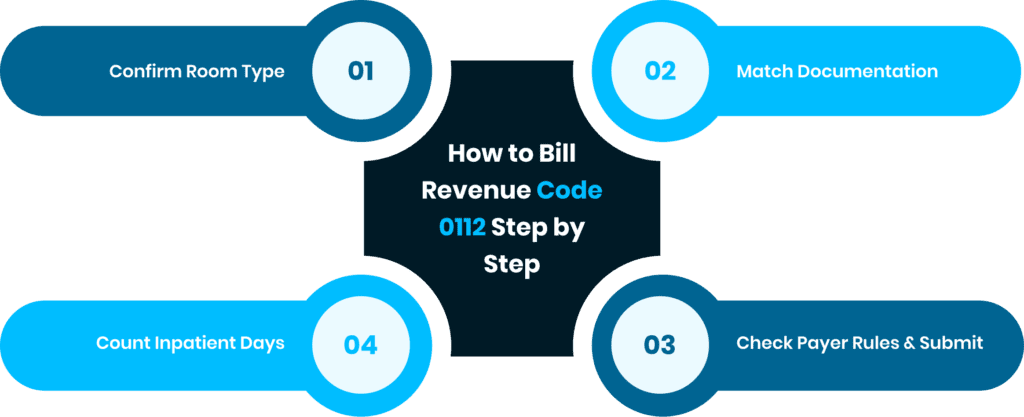
A simple workflow helps billing teams avoid mistakes. First, confirm the patient’s room assignment in the hospital system. Make sure it says “semiprivate, two beds.” Next, match this information with nursing notes to confirm the stay. Then count the number of inpatient days that apply to this room type.
After calculating the days, apply the correct daily room rate and add it to the claim. Some insurance companies also require a HCPCS code or special notes, so it is important to check payer rules in advance. When everything is reviewed and correct, the claim can be submitted.
Unique Information Providers Often Miss
Many providers do not realize that payers sometimes compare room type with the patient’s diagnosis. If the diagnosis suggests the patient needs isolation or a private room, and the provider bills 0112 instead, it may raise red flags.
Another detail many teams overlook is that weekend days still count as inpatient days even if the patient receives minimal care. Room charges continue as long as the patient remains admitted.
Hospitals should also know that Medicare pays based on the hospital’s average semiprivate room rate. If a hospital uses mostly private rooms, Medicare expects the average charge to stay consistent.
Tips to Reduce Denial
A few simple steps can reduce denials related to Revenue Code 0112:
- Update room assignments immediately when patients move
- Train nurses and administrative staff to document room type properly
- Keep payer rule sheets easy to access
- Perform monthly internal audits for room and board charges
- Review claim dates carefully before submission
These small improvements make a big difference in how quickly claims get paid.
Example:
A patient with pneumonia stays four nights in a semiprivate two-bed room and receives routine care. No room transfers occur, and documentation confirms the room type daily. Revenue Code 0112 is billed for all four days, creating a clean, accurate, and quickly processed claim.
Conclusion
Revenue Code 0112 is simple but important. It represents a semiprivate two-bed room for inpatient stays and affects a large portion of hospital reimbursement. When hospitals document room type correctly, follow payer rules, and use this code accurately, they protect their revenue and reduce claim problems.
By training staff, keeping documentation complete, and reviewing claims carefully, providers can avoid unnecessary denials and maintain steady cash flow. Even though the code looks small, it plays a big role in the overall success of hospital billing.
Frequently Asked Questions
What does Revenue Code 0112 cover?
It covers inpatient room and board charges for a semiprivate two-bed room, including routine nursing care and basic daily hospital services.
When should hospitals use Revenue Code 0112?
Use it when a patient stays in a semiprivate two-bed room during an inpatient admission with documented routine care and stable medical needs.
Can Revenue Code 0112 be used for outpatient stays?
No, this code applies only to inpatient admissions. Outpatient services require different revenue codes based on specific procedures or treatments provided.
What causes denials for Revenue Code 0112?
Most denials happen when room type is incorrect, documentation doesn’t match billing, or patient transfers aren’t properly recorded during the stay.
Does Medicare have special rules for 0112?
Yes, Medicare requires hospitals to bill semiprivate charges based on their average room rate and maintain accurate documentation supporting each billed day.