In the medical billing industry, there are no specific codes for non-serious health issues. These include caffeine deficiency or midweek lag, having no severe impact. Therefore, such conditions don’t have any specific ICD-10 Codes.
Within the ICD-10 Coding framework, fatigue has different symptom codes. Selection of the right code requires the provider to perform an accurate medical evaluation. It includes the patient’s condition and characteristics of the symptoms.
This blog covers all you need to know about fatigue ICD-10 coding R53, its importance, and symptoms.
Understanding Fatigue 1CD-10 Coding
Fatigue is a physical condition in which an individual feels exhausted or drained physically and mentally. Research shows fatigue is one of the most common symptoms in primary care visits
In medical billing, R53 is the code used to reflect fatigue. R83 is also a code indicating other fatigue. This is a common code used by healthcare experts when they see symptoms like low energy or tiredness.
However, it is important to differentiate certain symptoms of fatigue to ensure timely reimbursement.
| Term | Simple Definition |
| Fatigue | Feeling very tired and rest doesn’t usually make it better. |
| Tiredness | A short-term feeling after exercise or a lack of sleep. |
| Lethargy | Feeling tired and less responsive, mentally or physically. |
| Sleepiness/Drowsiness | A strong urge to sleep at inappropriate times. |
| Weakness | A person who does not have enough muscle strength. |
Since EHR is used to record and maintain the patient data. Therefore, the providers need to know the accurate ICD-10 codes against various symptoms.
- ICD 10 for Fatigue and Malaise
- Fatigue and Malaise ICD 10,
- ICD 10 Tiredness
- R53.83 ICD 10
Fatigue ICD-10 Code R53
Healthcare providers use the R53 code when the real reason behind the fatigue is unknown. In addition, the provider only treats fatigue when it starts impacting your daily life functioning. In the electronic healthcare records, it is mentioned as an R53.83, as the EHR supports decimal format.
However, you might see the code mentioned as r53 83, icd 10 r53.83 in the older healthcare records. While a provider uses all these variations for the same diagnosis.
Fatigue ICD-10 Code for Malaise and Deconditioning
A provider should mention an accurate code when documenting the symptoms like Maslise, Lethargy, Weakness, or Physical Deconditioning. Yet again, Fatigue ICD-10 Code R53.83 is used when the underlying cause of fatigue is missing. While there are other fatigue-related ICD-10 codes that offer a precise reason behind the problem.
R53.82 Chronic Fatigue
R53.82 is used when the patient is suffering from fatigue that no medical condition can explain. This code reflects Chronic Fatigue Syndrome (CFS). In addition, R53.82 is only assigned when this problem starts impacting daily life for a long time.
R53.1 Weakness
When a provider assigns the R53.1 Code, it means the patient is suffering only from weakness. Moreover, it should not be related to a neurological or musculoskeletal disorder. This code becomes relevant when an individual struggles to perform daily tasks due to this condition.
Healthcare experts often pair this code with symptoms consistent with the Fatigue ICD-10 malaise. This code also helps experts differentiate a non-specific weakness from specified health conditions.
R53.81 Other Malaise and Fatigue
When a patient feels tired or has low energy without a clear medical issue, R53.81 is used. In simple words, this Fatigue ICD-10 Code is used to indicate fatigue and malaise. Unlike fatigue, such codes are also used with fatigue-related codes to indicate the effects on patient health. Yet R53.81 is the most accurate code assigned when a patient experiences malaise and fatigue.
R53.0 Neoplastic (Cancer-Related) Fatigue
This code reflects the fatigue due to cancer treatments, radiation, or Chemotherapy sessions. Neoplastic fatigue is not general fatigue, as it is linked with oncology-related problems.
Therefore, if a patient is suffering fatigue because of neoplastic disease, using CD-10 R53.0 ensures it is not grouped with nonspecific conditions.
R53.2 Functional Quadriplegia
If a patient is suffering from immobility without having a clear neurological or muscular problem. Then it will be said as functional Quadriplegia, and the Fatigue ICD-10 code assigned is R53.2. These conditions only happen in people with deconditioning or chronic illness.
Code R53.2 is also coded with other Fatigue ICD-10 codes when the individual is facing fatigue and weakness.
Common Causes of Fatigue
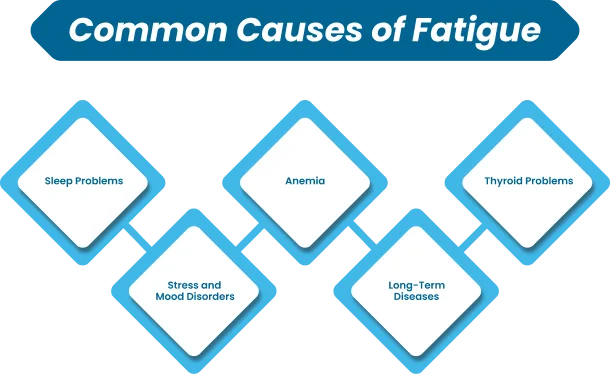
Fatigue can stem from many health issues. Finding the root cause is key because it helps coders know if a symptom code or a more exact code should be used.
Some common causes include:
Anemia
Low red blood cell counts can cut the flow of oxygen through the body, which may lead to long-term fatigue and weakness.
Thyroid Problems
Both low and high thyroid function can change energy levels and lead to severe tiredness.
Sleep Problems
Issues such as sleep apnea can stop deep rest at night and may cause fatigue during the day.
Stress and Mood Disorders
Stress, low mood, and fear can lead to low drive, low strength, and a lack of energy.
Long-Term Diseases
Heart disease, kidney disease, diabetes, and immune system disorders can all lead to lasting fatigue.
When a clear cause is found, coders should report the main diagnosis behind the fatigue when coding rules require it.
Common Fatigue ICD-10 Coding Mistakes to Avoid
Coding fatigue may seem easy, but some common mistakes can lead to claim issues.
Using R53.83 Without Checking Records
Coders should make sure the provider has documented fatigue and that no more exact condition applies.
Mixing Up Fatigue and Weakness
Fatigue and weakness are not the same. Weakness means less muscle strength, while fatigue means a lack of energy or a worn-out feeling.
Missing Chronic Fatigue Syndrome
If records support Chronic Fatigue Syndrome, R53.82 may fit the case better than R53.83.
Ignoring Linked Conditions
When fatigue stems from a known health issue, coders should review coding rules before using a symptom code.
Incomplete Provider Notes
Poor notes often lead to coding doubt, claim delays, and payment issues.
Avoiding these mistakes helps improve coding accuracy and supports clean claim submission.
Why Accurate Fatigue ICD-10 Coding Matters
Accurate coding helps providers, patients, and health plans. The right code gives a clear view of the patient’s health and supports proper payment.
Benefits of accurate coding include:
- Fast claim approval
- Fewer claim denials
- Better patient records
- Stronger health data reports
- Compliance with coding standards
Medical groups that focus on coding accuracy often face fewer billing issues and gain stronger revenue cycle results.
When Should Providers Investigate Fatigue Further?
Not all fatigue is the same. Short-term tiredness after a hard week may not need a full medical workup. Yet some cases need more review.
Providers may order more tests when:
- Fatigue lasts for many weeks
- Symptoms stay despite rest
- Weight loss is present
- Fever comes with fatigue
- Daily tasks become hard
- New or severe signs appear
More testing helps find serious health issues that may need care or treatment.
Conclusion
Fatigue is one of the most common symptoms seen in healthcare, which makes accurate ICD-10 coding very important. While R53.83 is often used for unspecified fatigue, other related codes may better match the patient’s condition when more details are available.
Strong notes and clear knowledge of coding rules help right pay and safe med records. By telling fat apart from weak, sick feel, and long fat, doctors and coders can raise claim right rate, cut claim loss, and stay in line with ICD-10 rules in 2026. Paymedics also helps organizations to solve coding-related matters and improve their profitability.
FAQs
1. What is the ICD-10 code for fatigue?
The most common Fatigue ICD-10 code is R53.83. It is used when no clear cause of fatigue has been found.
2. Is fatigue the same as weakness in ICD-10 coding?
No. Fatigue means low energy or a worn-out feeling, while weakness means less muscle strength and may need a different code.
3. What code is used for Chronic Fatigue Syndrome?
R53.82 is often used for Chronic Fatigue Syndrome when the provider clearly documents the condition in the medical record.
4. Can fatigue be coded with other conditions?
Yes. Coding depends on the records, coding rules, and whether a known health issue is the cause of the fatigue.
5. Why does documentation matter for fatigue coding?
Clear documentation helps coders pick the right code, supports claim approval, and cuts billing mistakes and denials.
6. What causes fatigue in most patients?
Fatigue can stem from anemia, sleep problems, thyroid issues, long-term disease, stress, low mood, and many other health conditions.