
Charge Entry is the process of recording services and supplies given to a patient. This step happens after the medical coding and before filing the claims. Therefore, it is a crucial process that can impact revenue cycle management. A slight mistake in recording the services can result in wrong documentation and claim rejection.
Therefore, healthcare organizations should pay attention when recording the healthcare services and equipment. This article will explain 8 things you must know about the charge entry in medical billing.
Why is Charge Entry Important?
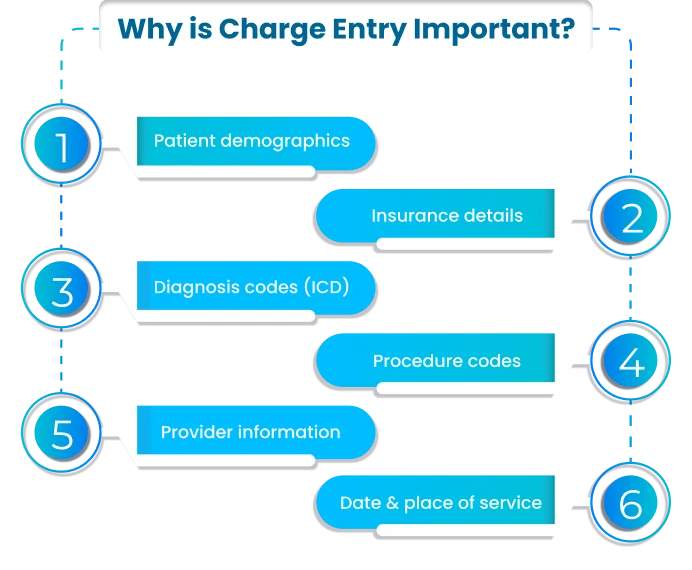
In medical billing, charge entry involves very important patient information such as
- Patient demographics
- Insurance details
- Diagnosis codes (ICD)
- Procedure codes (CPT/HCPCS)
- Date and place of service
- Rendering provider information
Missing anything amongst the above-mentioned information leads to claim rejection and revenue loss.
Healthcare organizations can lose up to 3%–5% of total revenue every year because of billing mistakes and inefficient charge capture.
Therefore, the provider should carefully enter the data to receive timely reimbursement against the services rendered.
Basic Meaning of Charge Entry
Charge Entry in Medical Billing means putting patient care data in a billing system after a doctor’s visit. This data has the doc work, visit date, and care type. This step turns health care work into a claim that insurance firms can read and pay.
In the US, rules from the Centers for Medicare & Medicaid Services guide how this data must be put in and used. Think of it like writing a shop bill where each item must be right, or the pay will not come.
Why It Must Be Right
Charge Entry in Medical Billing must be right, as small faults can make a big loss. If data is wrong, insurance firms may not pay or may hold the claim. This makes more work for staff and slows cash flow. When all is right, claims move fast, and pay comes on time. It is like sending a package to the right home; one small slip can send it to the wrong place.
1. Use of Codes
Charge Entry in Medical Billing needs codes that show what care was given. These codes help ins firms know the work done in clear form. One key set is ICD-10-CM, which shows sick type and health cases. CPT and HCPCS codes show doc work and tools used. If the wrong code is used, the claim can fail or get less pay, so care is key.
2. Patient Data Role
Healthcare providers should enter accurate patient data for the right claim work. This has pat full name, birth date, insurance ID, and plan info. If one part is wrong, the insurance firm may not match the case and may not pay. That is why staff must check each line with care. It is like filling a form where each word must match the real doc proof.
3. Common Faults
Charge Entry in Medical Billing can fail due to small human faults. Most common faults are wrong code, no charge, wrong date, or double entry. These faults can stop payment or delay the claim work. In busy work, staff may rush and miss small points. Slow and sure work helps stop most of these faults.
4. Soft Use in Work
Charge Entry in Medical Billing is done with software tools that make work fast and clear. These tools store pat data, check codes, and help send claims. Many tools follow rules set by the American Medical Association for code use. These soft tools cut human error and save time. They also help staff track each claim with ease.
5. Safe Data Rules
Charge Entry in Medical Billing must keep patient data safe by law. Data must not be shared or misused at any time. A key law is HIPAA, which guards all patient health info in the US. Staff must use safe log in, keep pass safe, and l0og out when work ends. This builds trust and keeps data safe from harm.
6. Train and Best Work
Charge Entry in Medical Billing works best when staff get good training and keep focus. The train helps them learn codes, rules, and soft skills. Good work steps are to read doc notes with care, check data twice, and stay up to date. When staff work slowly and correctly, errors drop, and pay comes fast. Good skills grow with time and daily work.
How Charge Entry Helps Cash Flow
Charge Entry in Medical Billing has a huge role in cash flow. Each time a patient gets care, the work must be put in the billing system. In case of a missing entry, the clinic may not get timely payment. This means lost funds and less income for the health care team.
When staff add charges on time, claims can go out fast, resulting in quick payments. This helps clinics pay bills, buy tools, and handle daily work with ease. A good charge entry process keeps the flow of funds smooth and helps the whole team.
Link with Revenue Cycle
Charge Entry is a key part of the revenue cycle. It starts when a patient gets care and ends when the clinic gets paid. If the charge entry step has faults, the whole cycle can slow down.
A clean charge entry process helps with all the next steps. Claims can move with fewer edits and less back-and-forth work. This saves time and helps staff focus on care and not just fixes.
Why Daily Checks Help
Many clinics do daily checks on charge entry work. This helps find faults at an early stage. Staff can check dates, codes, names, and plan data. They can also make sure no charge was left out. These checks help stop lost pay and keep the work clean.
Teamwork Makes a Big Gain
Charge Entry in Medical Billing is not a one-person task. It needs help from docs, coders, and billing staff. Each team has a part in the work.
The doc must write clear notes. The coder must use the right codes. The billing staff must add the data with care. When all teams work well, claims move fast, and pay comes with less stress.
How Missed Charges Impact Profitability
Missed charges directly lead to the loss of practice revenue. Providers who provide top-quality patient care, but fail to record the services can lose revenue.
These small losses may seem minor at first. Yet, over a year, they can add up to a huge loss. That is why many clinics track all visits and check that each charge is in the system.
Tips for Better Charge Entry
There are some easy ways to make charge entry work better:
- Add charges on the same day when you can.
- Read doc notes with care.
- Check all codes two times.
- Keep patient data up to date.
- Use billing tools that help spot faults.
- Train staff on new rules and code sets.
- Run checks each week to find gaps.
These simple steps can help cut faults, speed up claims, and bring in more pay.
Conclusion
Charge Entry in Medical Billing is a key part of the US health care billing process. It connects patient care with insurance payment. When it is done right, claims go through fast, errors stay low, and clinics get paid on time without stress. Correct codes, clean data, and careful work make the whole system smooth and strong.
In short, Charge Entry in Medical Billing keeps the full billing path clear, fast, and reliable from start to end.https://paymedics.com/
Struggling with the charge capture? Paymedics offers professional charge entry services to help providers avoid claim denials and increase practice revenue.
FAQs
1. What is a charge entry in medical billing?
Charge Entry in Medical Billing means putting patient care data in a billing system so insurance claims can be made and sent for payment clearly and correctly.
2. Why is the charge entry key in health care?
It is key as it links care with pay. Right entry helps fast claim pass, while wrong entry leads to hold or loss of pay in most cases.
3. What codes are used in charge entry?
ICD-10-CM, CPT, and HCPCS codes are used. They show sick type, doc work, and tools used so ins firms can read the claim with ease.
4. What if the charge entry has faults?
Faults in Charge Entry in Medical Billing can lead to no pay, slow pay, or claim loss. Staff must fix and send the claim again with care.
5. Who does charge entry work?
Trained bill staff or coders do this work. They read doc notes and put right data in the sys for ins claim work and pay flow.
6. How can charge entry get better?
It can get better with training, care, check, and soft use. Staff must work slow, check each line, and keep up with rule changes for best results.